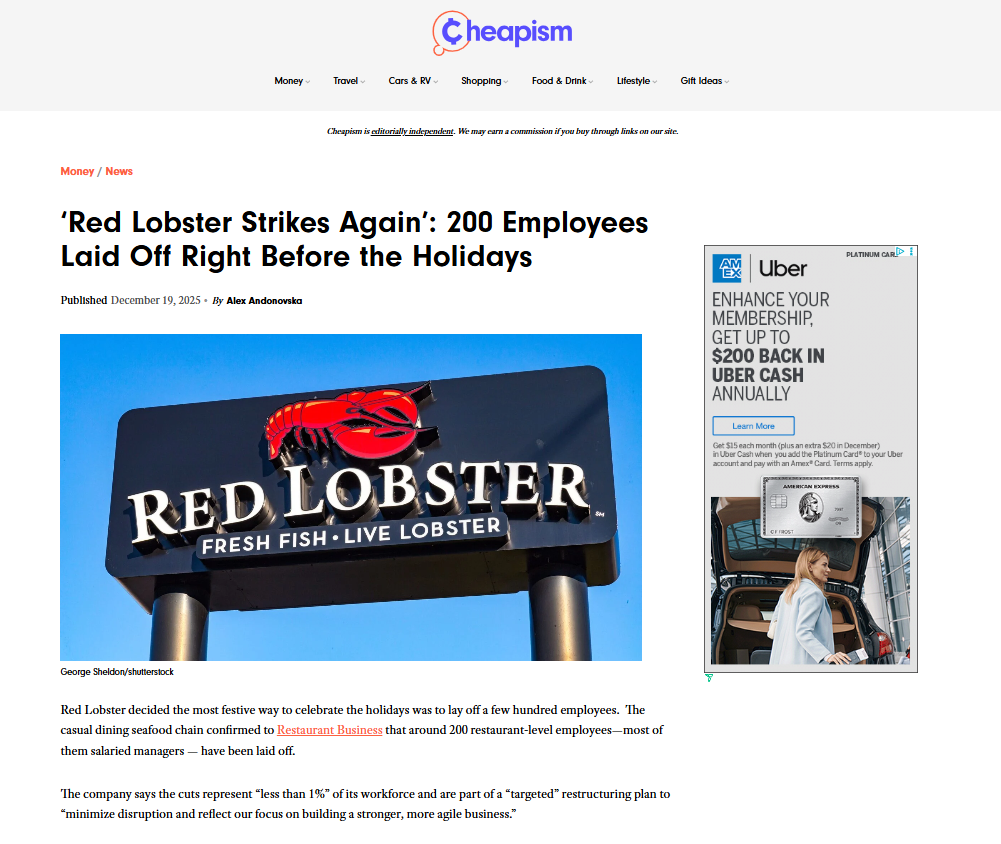
When Cheapism reported that Red Lobster had laid off roughly 200 restaurant‑level employees just before the holidays, the news reverberated far beyond the seafood chain’s dining rooms. For many communities across the Mid‑Atlantic and beyond, Red Lobster isn’t just a restaurant — it’s a familiar landmark, a place where families gather, and a symbol of the shifting American retail and dining landscape.
As the chain continues to navigate the aftermath of its 2024 Chapter 11 bankruptcy filing, the latest round of cuts — affecting mostly salaried managers — underscores a deeper story about corporate restructuring, economic pressure, and the people caught in the middle. According to Restaurant Business, the layoffs represent “less than 1%” of the company’s workforce and are part of a “targeted” effort to streamline operations. But for those suddenly without a job, the impact is anything but small.
A Company in Crisis Mode
Red Lobster’s financial struggles have been well‑documented. After closing more than 100 locations in 2024 and being acquired by Fortress Investment Group, the company has attempted to rebuild through cost‑cutting, tech upgrades, and revamped promotions. Yet internal accounts — including those shared anonymously by managers — paint a picture of delayed bonuses, abrupt terminations, and severance paperwork that raised eyebrows among employees.
The layoffs also come amid broader economic trends. As Cheapism notes, U.S. layoff announcements in 2025 have reached their highest levels since the pandemic. Red Lobster is not alone — but its visibility makes it a powerful symbol of the moment.
Why This Matters for Editorial Photography
For editorial photographers like George Sheldon, these shifts represent more than headlines. They’re unfolding stories happening in real communities — York, Harrisburg, Baltimore, Philadelphia, and countless towns where Red Lobster has long been part of the commercial landscape.
Documenting these changes matters.
Closed storefronts. Empty parking lots. “For Lease” signs replacing familiar logos. Former employees gathering belongings from shuttered locations. These are the images that define economic transitions — and they’re often overlooked until someone with a camera steps in to preserve them.
Editorial photography plays a crucial role in contextualizing business news. A national chain’s bankruptcy becomes real when readers see the boarded‑up entrance in their own town. A corporate layoff becomes human when a portrait captures the uncertainty on a worker’s face.
As Red Lobster continues restructuring, more communities may see their local restaurants close or change hands. These moments deserve to be documented with accuracy, empathy, and a regional eye — something George Sheldon has built a career delivering.
Looking Ahead
Red Lobster’s leadership insists the cuts are part of a long‑term plan to build a “stronger, more agile business”. Whether that vision succeeds remains to be seen. What’s certain is that the story isn’t over — and photographers on the ground will continue to play a vital role in showing what corporate decisions look like in everyday American life.
Screenshot of blog post discussing Red Lobster layoffs 2025 with editorial photography insights by George Sheldon.