Why Real Photography Matters More Than Ever in the Age of “AI Slop”
Artificial intelligence is reshaping everything — including how brands, restaurants, and even real estate agents create visuals. But as AI‑generated images flood the internet, something unexpected is happening: people are getting uncomfortable.
A recent USA Today report highlighted growing backlash against AI food slop — the term people use for fake, distorted, or unsettling AI‑generated food images that look almost real… but not quite. The article explains that viewers often feel uneasy because AI visuals lack authenticity, accuracy, and the subtle imperfections that make real photos feel human.
And that discomfort isn’t limited to food.
It’s happening across real estate, hospitality, architecture, commercial development, and marketing — anywhere visuals matter.
This is exactly why hiring a real photographer still makes sense, and why your brand should lean into authenticity instead of artificial shortcuts.
1. AI Images Look “Off” — Real Photos Build Trust
AI visuals often fall into the uncanny valley:
- warped textures
- impossible reflections
- incorrect shadows
- distorted geometry
- plastic‑looking surfaces
- inconsistent lighting
Consumers notice. They may not know why an image feels wrong, but they feel it.
Real photography doesn’t trigger that discomfort. It builds trust because:
- the space actually exists
- the lighting is real
- the perspective is accurate
- the details are true to life
In real estate and commercial development, trust is everything. A buyer or investor must believe what they’re seeing.
2. AI Slop Hurts Brand Credibility
The USA Today article makes it clear: people are calling out brands that use fake AI food because it feels deceptive.
The same applies to property marketing.
If a hotel, Airbnb, or listing uses AI‑generated rooms, skies, or enhancements, viewers feel misled — and that damages reputation.
Real photography signals:
- professionalism
- transparency
- accuracy
- pride in the product
Authenticity is a competitive advantage.
3. AI Can’t Replace Real‑World Expertise
AI doesn’t understand:
- zoning requirements
- architectural accuracy
- how a space actually feels
- how light behaves in a real room
- how to tell a visual story
A professional photographer brings:
- composition
- timing
- technical skill
- storytelling
- experience
- artistic judgment
AI can assist — but it cannot replace the craft.
4. Real Photos Perform Better in SEO
Search engines reward:
- original content
- unique images
- metadata‑rich photography
- location‑specific visuals
- high‑quality media
AI images are often:
- duplicated
- generic
- low‑value
- non‑unique
Google’s own guidelines emphasize that original photography improves ranking for local businesses, real estate listings, and service providers.
Real photos = real SEO power.
5. Real Photography Protects You Legally
AI images raise legal questions:
- Who owns the copyright?
- Can you use AI images commercially?
- Are you misrepresenting a property?
- Are you violating MLS rules?
MLS systems already restrict AI‑altered listing photos. Some brokerages ban them outright.
Real photography avoids:
- compliance issues
- misrepresentation claims
- copyright disputes
It’s safe, clean, and professional.
6. Authentic Visuals Convert Better
People buy what they trust.
Authentic photography consistently outperforms AI visuals in:
- click‑through rates
- booking conversions
- listing engagement
- time‑on‑page
- social media interaction
Real photos feel real — and real sells.
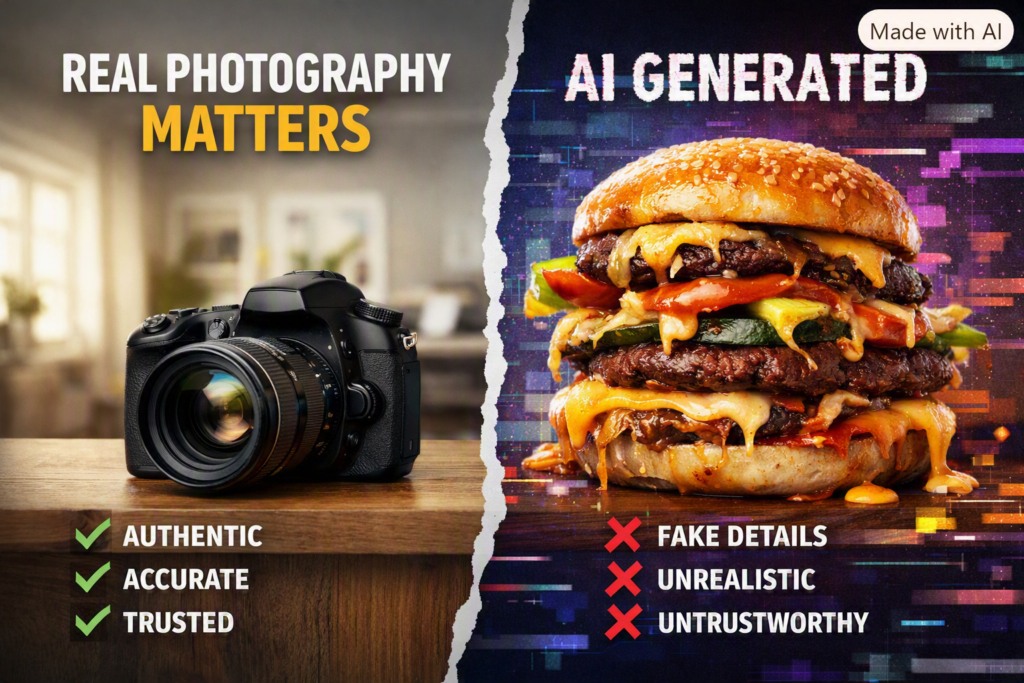
The Bottom Line: AI Is a Tool. Real Photography Is the Truth.
AI can enhance workflows, create mockups, or help visualize concepts. But when it comes to showing real spaces, real products, or real experiences, nothing replaces a professional photographer.
Consumers are already rejecting AI slop. Brands are being called out. Trust is becoming the new currency.
If you want credibility, accuracy, and authenticity — you need real photography.